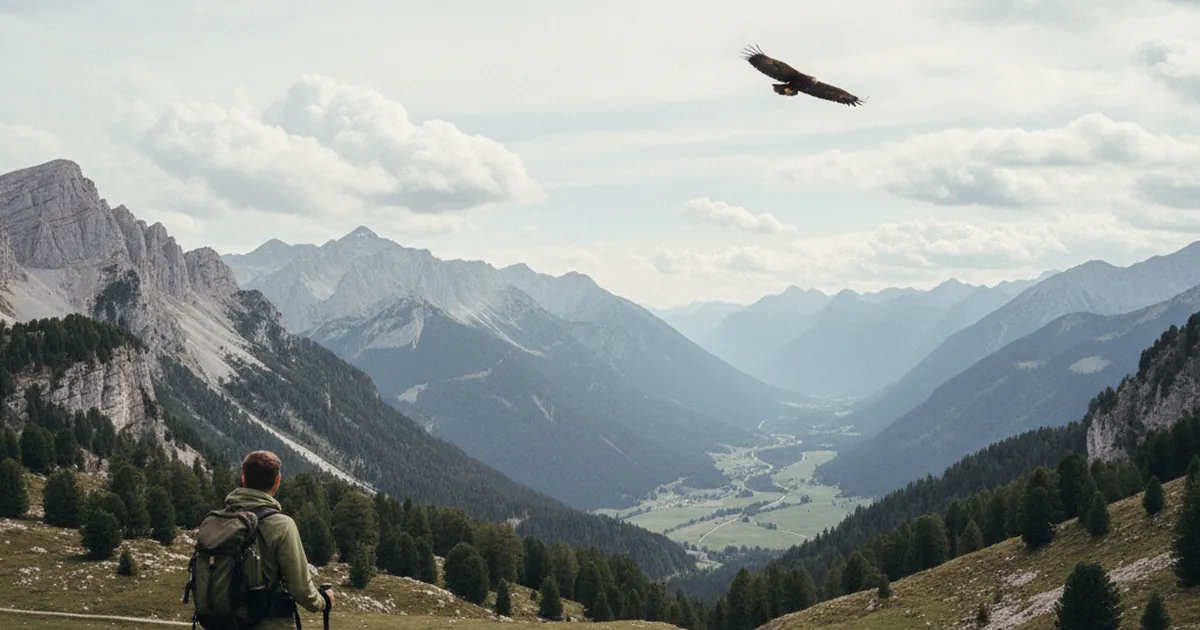
The golden eagle is part of the alpine landscape in Haute-Savoie. That large, brown silhouette soaring high above the ridges, barely flapping its wings, is one of the most memorable encounters you can have in the mountains. Some areas produce far more sightings than others. This is not an exhaustive list or a guarantee of success: it is a starting point for planning hikes in the most promising zones.
What the eagle needs
To know where to look, you need to understand its habitat preferences. The golden eagle seeks out cliff faces and rocky ledges for nesting, well away from busy areas. Around its breeding site, it hunts across vast open territories: alpine pastures, scree slopes, open hillsides. It avoids dense forest. The more broken the terrain, the more open the slopes, and the more cliff faces present, the more suitable the environment.
Haute-Savoie has several massifs that match these criteria. The Chablais with its rocky summits above the Portes du Soleil, the Giffre valley with its large cirques and limestone walls, and the Aravis with their sharp ridges are the most interesting sectors to explore.
The Chablais: above Morzine and the Portes du Soleil
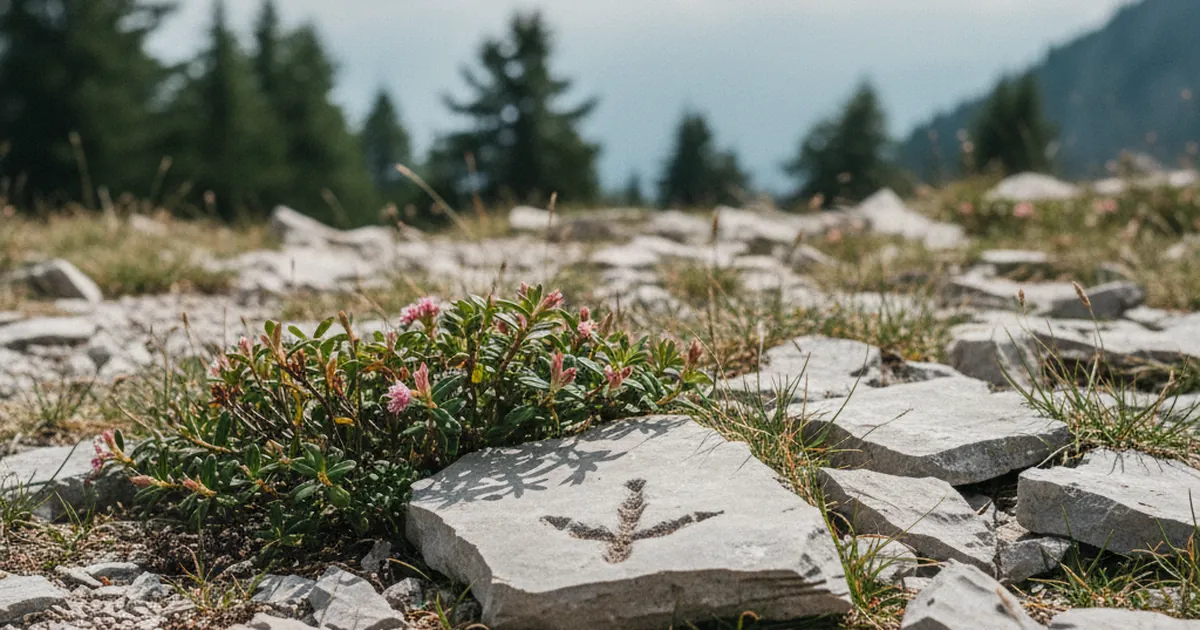
The Chablais massif has high-altitude areas with steep limestone faces alternating with wide open pastures. The ridge sector above Morzine and the Portes du Soleil is good terrain: rocky slopes sit next to open grassy hillsides, matching exactly the hunting habitat eagles need. Thermals build early once the sun reaches the south-facing slopes.
Several trails leave from the villages and climb steadily to the ridgelines. Patience matters once you are up there: it is not unusual to wait on a high point before spotting a silhouette circling in the distance.
The Giffre valley: cliffs and cirques
The Giffre valley is one of the most interesting areas. The large limestone walls flanking the valley, the high-altitude pastures and the surrounding rocky massifs create an environment suited for both nesting and hunting. The area around Samoëns gives access to the high ridges via several trails.
Gaining the heights above the Giffre, for instance heading up to the Pointe de Sales, puts you in open rocky terrain of exactly the type eagles move through. Watching a golden eagle from a summit, at its own altitude, is an experience that stays with you.
The Aravis: limestone ridges and open pastures
The Aravis has classic limestone terrain, with cliffs, rocky passes and wide open alpine pastures. The La Tournette area, reached from Talloires-Montmin, offers clear views over a rocky alpine landscape typical of the habitat this raptor favours. The ascent of La Tournette from Montmin places you in open, mineral surroundings, with the faces and ledges where eagles may nest.
In the field: improving your chances
- Choose mid-morning or early afternoon, when thermals are active. Eagles use these air currents to soar effortlessly, and this is when they are most visible in flight.
- Position yourself on a high point with a clear view across an opposite slope. Watching from a col or a summit significantly increases the chances of encountering an eagle at eye level.
- Stay away from cliff faces during the breeding season, from February to July. Golden eagles are highly sensitive to disturbance at the nest site, and repeated intrusion can lead to nest abandonment.
- Strong binoculars are essential. Eagles often fly very high, and identifying one by eye alone takes real experience.
- Note the time, the sector and the observed behaviour. These records are useful to naturalist associations tracking population trends.
When to go
The most productive period runs from late summer through autumn. Clear days after a frontal passage, with light wind, are often the richest for sightings. Adult birds and birds of the year move more freely outside the constraints of the breeding season and cover greater distances.
Spring, outside the sensitive nesting period, can also be productive: thermals build early once the sun climbs, and eagles are often visible from mid-morning onwards.
Keeping an eye on the sky is part of the experience when hiking in Haute-Savoie. The massifs of the region have supported eagle territories for centuries, and every outing at altitude is a chance to spot one.