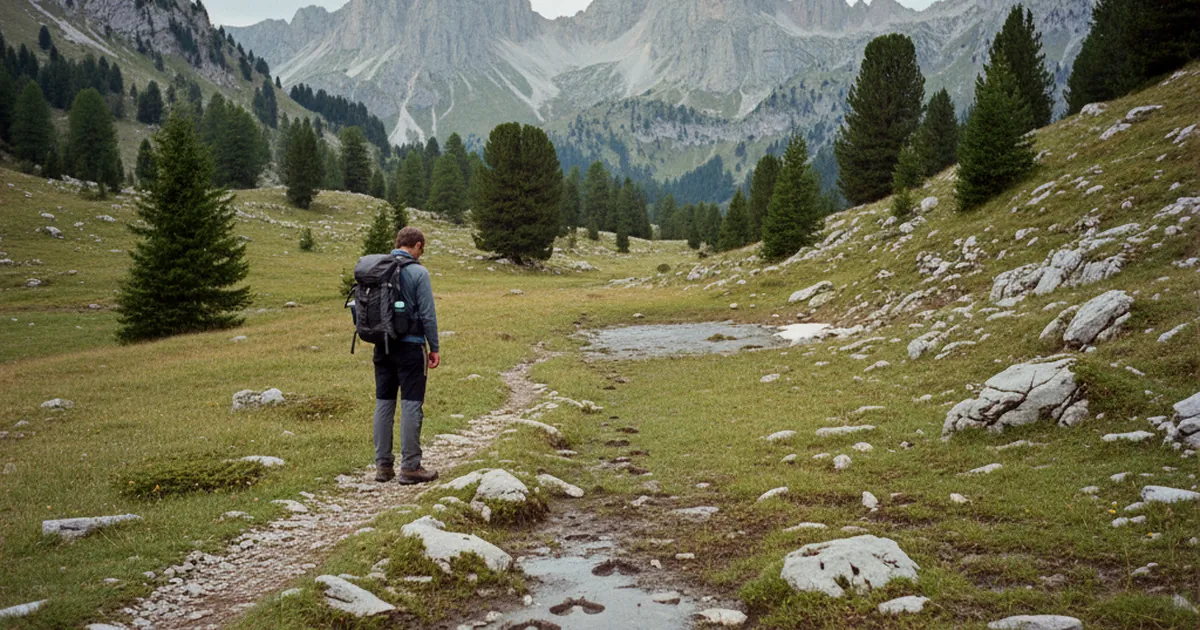
In the mountains, chamois are often spotted from a distance: a nimble silhouette darting along a ridge, a sharp leap between two rocks. Getting close is rare. Learning to read their tracks is another way to step into their territory without waiting for a sighting. On the hiking trails of Haute-Savoie, these signs are everywhere for those who know how to look.
The chamois hoof print
The chamois is a two-toed ungulate. Each hoof forms an elongated cleft, roughly 4 to 5 centimetres long, with a hard outer rim and a soft inner pad that grips rock with remarkable precision. On soft ground, the track shows two parallel slots, slightly diverging at the front. It resembles a roe deer's print but is more elongated and less heart-shaped. Ibex leave a noticeably larger and wider impression. These differences are visible to the naked eye on soft ground. On wet or snowy terrain, stride length also tells a story: short, even steps on flat ground, stretched prints on steep descents when the animal accelerates. A flight track in fresh snow can indicate a recent disturbance.
Other field signs
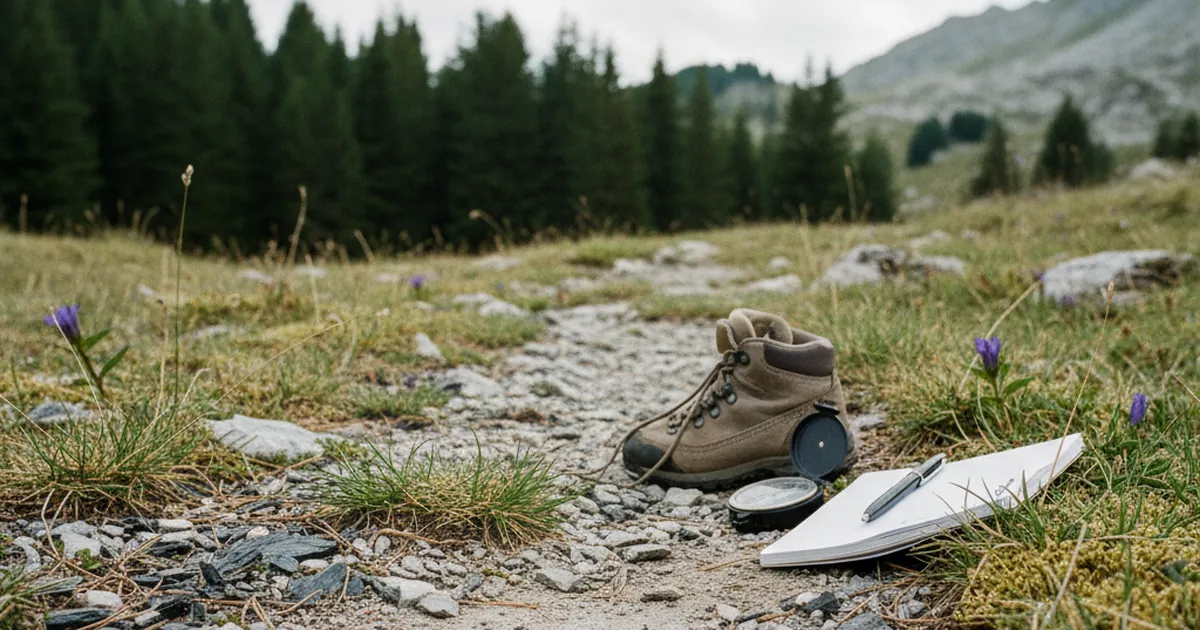
Droppings are another reliable indicator. Chamois produce small black or dark-brown cylindrical pellets, roughly a centimetre long, left in loose clusters. You'll find them on flat ledges, near rocks or at forest edges. Unlike hare droppings, which are rounder and paler, chamois pellets are compact and grouped in distinct, tidy piles. The chamois also marks its passage through scent rubs: the glands located behind the horns, most active during the rut in November and December, leave a brown, oily secretion on shrubs and rocks. Scratch marks in snow or soft earth reveal feeding activity, as chamois dig with their hooves to reach grass or roots beneath the snow cover.
Chamois trails and run corridors
The chamois is a creature of habit. It regularly uses the same ascent and descent corridors, gradually wearing narrow trails into the slope. These natural paths, known as coulées, look like small tracks, about fifteen centimetres wide, lightly hollowed into the vegetation. They generally follow the contour lines and rely on natural features: rocky ledges, edges of alder thickets or rhododendron belts. You can tell them apart from human paths by their narrowness and regularity on slopes that would be impassable for us. When you come across one of these corridors, follow it upward with your eyes: you'll usually find the spur or ledge the herd uses every day. A good pair of binoculars will sometimes let you spot the animals themselves on these regular routes.
Seasonal readability
Snow is the best tracker of all. After a fresh fall, prints stay sharp for a few hours before sun and wind blur them. In spring, waterlogged soil holds impressions well, and chamois also leave tufts of fur on wire fences and shrubs as they shed their winter coat. In summer, dry and hard terrain makes tracks harder to read, though run trails remain clearly visible through the alpine meadows. Summer is also when herds move into the highest zones, above the tree line. Autumn is the richest season for field signs: the rut (November and December for chamois, unlike red deer whose rut peaks in September) brings intense movement, heavy rub-marking on shrubs, and noticeable activity in areas usually left undisturbed.
Where to look in Haute-Savoie
Chamois are present across almost every massif in Haute-Savoie, from around 800 metres upward. Rocky slopes and high pastures are their preferred terrain, as long as the gradient is steep enough to offer a quick escape route in case of danger. In the Aravis-Bornes range, east and north-east facing slopes host regular groups. The Annecy and Bauges country also offers excellent viewing conditions from ridges and cliff edges. If you're planning a high-altitude outing, the route up to La Pointe de Nantaux from Montriond passes through typical alpage terrain where chamois tracks are common in late summer. Around Samoëns, the Dent de Verreu via Vallon follows steep slopes where chamois are perfectly at home.
Reading chamois tracks takes no special equipment, just attention and time. Look down at soft ground underfoot, scan the slopes with binoculars, notice paths too narrow to be human-made. With practice, you'll start to see the landscape differently: not as a backdrop, but as a lived-in territory, crossed every day by discreet, watchful animals.