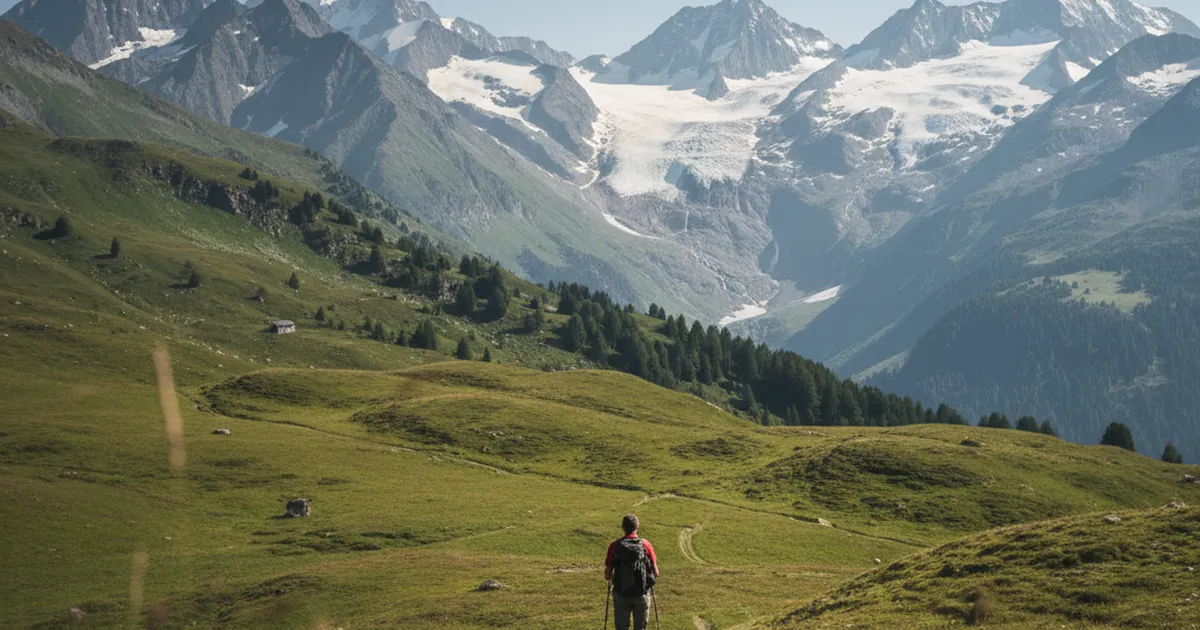
Forty years ago, the bearded vulture had nearly vanished from the French Alps. Today, its massive silhouette can cross the sky above the ridges of Haute-Savoie. This comeback is not a coincidence: it is the result of a patient reintroduction programme carried out since the 1980s. To hike in Haute-Savoie and have a real chance of spotting one, you need to understand where it lives, which season to target, and how to behave in the field.
A comeback after centuries of persecution
The bearded vulture, also known as the lammergeier or ossifrage, was persecuted for centuries across Europe. Feared as a threat to livestock, it had almost completely disappeared from the Alps by the early twentieth century. The recovery effort began in 1986 with the first releases in Austria, as part of an international programme coordinated by the Bearded Vulture Foundation. In France, reintroductions started in the Southern Alps from 1987, and the Northern Alps, including Haute-Savoie, have gradually benefited from the natural expansion of these populations.
In France, monitoring is coordinated by the LPO (French bird protection league) and partner associations. Today, dozens of pairs are recorded across the Alps. Young birds from established territories are exploring new massifs, and regular sightings in Haute-Savoie confirm this ongoing expansion.
The best areas to search in Haute-Savoie
The bearded vulture favours high-altitude rocky massifs, limestone cliffs, scree slopes and wide open terrain. It needs space to soar, exposed hillsides to scan for carcasses, and hard rocks to smash bones against. Several areas in Haute-Savoie match these requirements.
The Aravis massif offers highly suitable terrain: imposing limestone cliffs, open alpine pastures and significant elevation changes. This is classic bearded vulture country, particularly above the summer grazing zones where carcasses occasionally remain on high ground. The Pays du Mont-Blanc area, with its rocky flanks and remote sectors, is another territory the bird prospects regularly.
The Haut-Chablais and its limestone massifs also provide quality sites, especially in cliff zones and rocky combes far from built-up areas. The bearded vulture is not a forest bird: it needs open air, bare rock and altitude.
The best time to spot one
Unlike many raptors, the bearded vulture does not migrate. It can be observed year-round in the areas it frequents. Nesting starts early, in November or December, so that juveniles are ready to fly by summer. During winter, adults are busy on their nesting territories, often in extremely inaccessible locations.
The best observation window runs from spring through summer, roughly March to September. Thermal conditions allow extended soaring flights above ridges. This is when the bird is most visible: it climbs high, rides updrafts and covers vast territories in search of food. Mid-morning, once thermals start building around 9 or 10 am, is typically the best time of day.
How to observe without disturbing
Watching a bearded vulture takes patience and discretion. Key points:
- Bring a powerful pair of binoculars, at least 10x42. The bird often soars very high and details disappear to the naked eye.
- Position yourself on an exposed promontory with a wide view of the surrounding ridges. Mountain passes, flat summits and open arêtes all make natural observation posts.
- Stay still and quiet. The bearded vulture is not particularly shy, but a noisy group on a ridge can cause it to change course.
- Never approach a nesting site. Nesting zones are often known to local associations. Respect the recommended distances.
- Report your sightings to LPO Auvergne-Rhône-Alpes: every record counts for population monitoring.
Two hikes offering good observation posts
The Rochers de l'Aigle hike from Ayse places you above the Arve valley, on rocky ridges with a wide horizon. This fragmented limestone terrain, a mix of woodland and cliff faces, is the kind of landscape a bearded vulture crosses when moving between massifs. Accessible and well-marked, this outing works well for a half-day of quiet observation on the heights.
For truly alpine terrain and altitudes conducive to sightings, the Pointe de Sales hike from Sixt-Fer-à-Cheval is a strong option. This demanding 15 km route climbs to over 2,400 m in a landscape of ridges and open drops typical of bearded vulture habitat. It is reserved for experienced hikers and requires stable weather, but the views from the high points offer exceptional conditions for raptor-watching.
The return of the bearded vulture to Haute-Savoie is one of the great conservation success stories of the French Alps. Spotting one in flight, its unique silhouette unmistakable against the sky, is a rare and memorable experience. Pick the right terrain, the right time of day, and bring the right kit. The mountains of Savoie sometimes offer encounters you carry with you long after the trail ends.