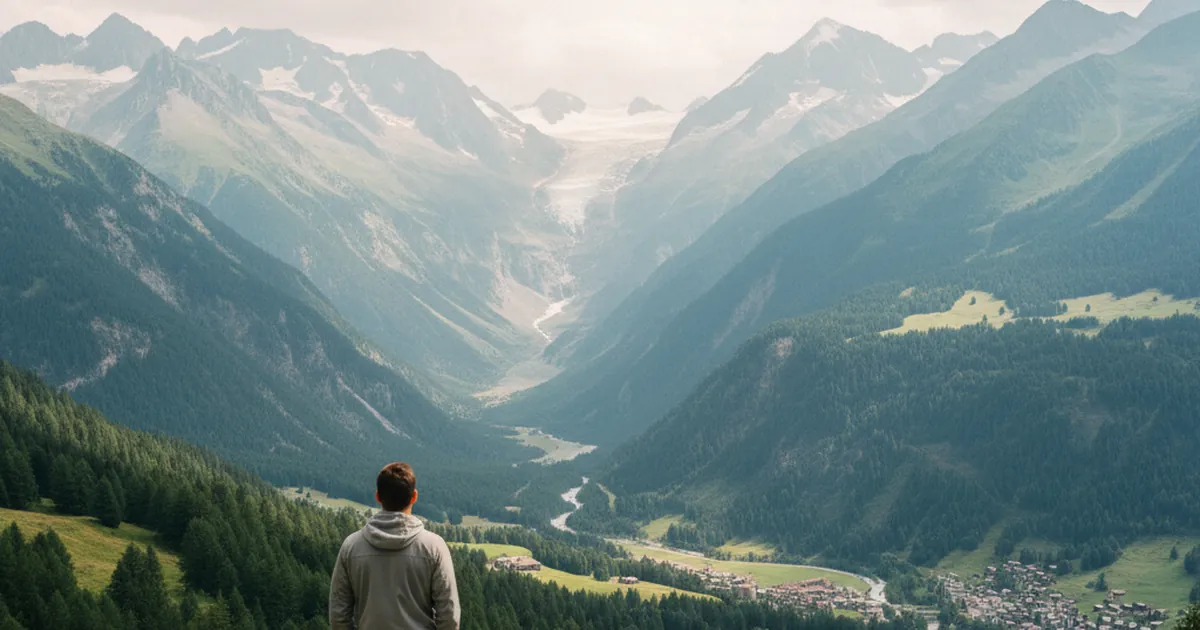
Today, Chamonix-Mont-Blanc welcomes millions of visitors each year, drawn from across the globe by its glaciers, peaks and trails. But this status as the world capital of alpinism was not built overnight. It is the product of three centuries of exploration, curiosity and development. From a handful of awestruck English travellers to the Olympic resort we know today, here is the story of how humanity learned to look at the mountains differently.
The first curious visitors: 1741, a valley discovered
In 1741, two Englishmen travelling from Geneva made their way toward what local inhabitants called "the cursed mountain." William Windham and Richard Pococke followed the Arve valley, climbed the lower slopes and reached the Mer de Glace. Their accounts, published and circulated across Europe, caused a sensation. They described a glacial landscape that no one in educated circles had yet documented with such precision.
These texts opened a door. Within a few decades, philosophers, naturalists and aristocrats were making the journey. Jean-Jacques Rousseau, without ever visiting Chamonix himself, helped popularise the image of the mountains as a place of the sublime and of regeneration. The Arve valley, which you can explore today through superb hiking routes, was then virtually unknown to educated Europeans.
1786: the conquest of Mont Blanc and the birth of alpinism
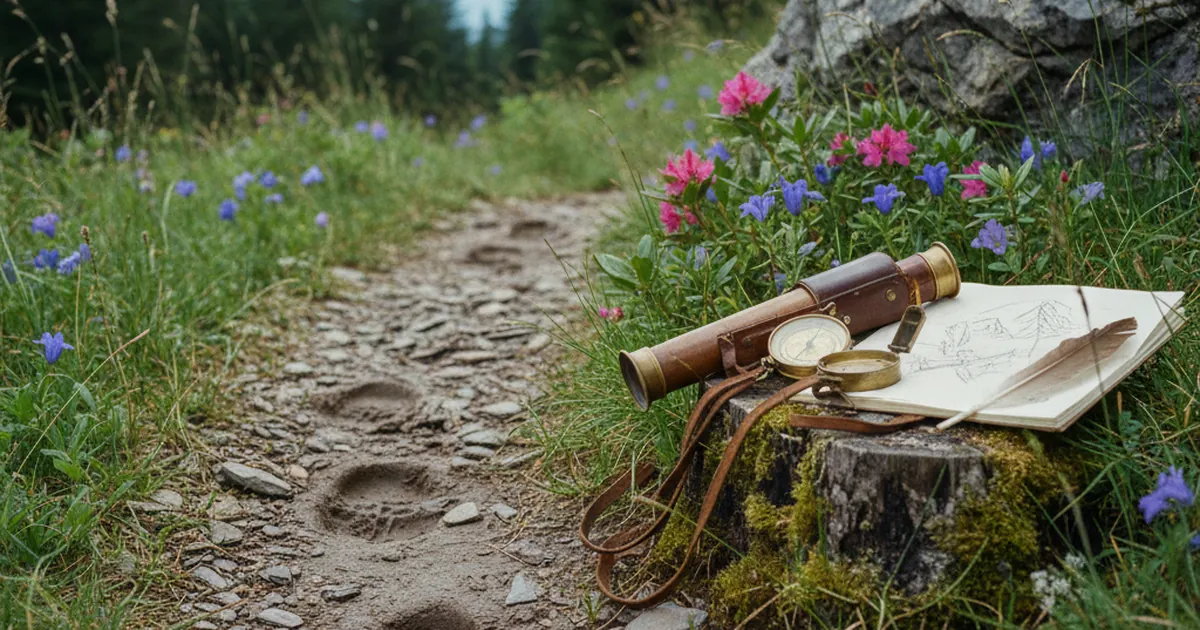
On 8 August 1786, Jacques Balmat and Dr Michel Gabriel Paccard reached the summit of Mont Blanc at 4,808 metres. It was the first documented ascent of the highest peak in the Alps. The event sparked an immediate craze. Alpinism was officially born, and Chamonix established itself as its natural cradle.
The following year, Horace-Bénédict de Saussure, a Genevan naturalist, completed the ascent with a team of local guides. He consecrated Chamonix as the centre of scientific and sporting mountaineering. The mountain guiding profession, a structured brotherhood that continues to this day, took shape in this era. It was the beginning of a pursuit-driven form of tourism, reserved for the most daring, yet captivating all of Europe.
Goethe, Shelley, Byron: the great names of Romantic literature made the pilgrimage. In 1816, Lord Byron visited the Mer de Glace and drew inspiration for his writing. The mountain was no longer merely an obstacle or a resource. It had become a subject of contemplation, self-surpassing and literary expression.
The 19th century: hotels, roads and mass tourism
Throughout the 19th century, visitor numbers to Chamonix soared. The construction of hotels, inns and passable roads gradually transformed the valley. In 1860, Savoy was annexed to France, opening new economic horizons and improving connections with Lyon, Paris and the major European capitals.
The real turning point came in 1901 with the railway. The electric line linking Saint-Gervais to Chamonix opened mountain tourism to a far broader public: bourgeois families, civil servants, tradespeople. People no longer came only to climb. They came to breathe fresh air, to walk, to recover their health. Hotels multiplied. The Compagnie du Mont-Blanc took shape to organise and manage access to the summits. Chamonix was, ahead of everyone else, inventing the model of the modern mountain resort.
Elsewhere in Haute-Savoie, other landscapes still carry the memory of these layered eras. The medieval towers of Saint-Jacques stand as reminders of a time when the Savoyard mountains were first and foremost a space of power, trade and defence, long before they became a leisure destination.
1924: the first Winter Olympic Games
On 25 January 1924, Chamonix hosted the first official Winter Olympic Games, with sixteen nations taking part. Alpine and cross-country skiing, figure skating, bobsleigh: the competition gave Chamonix unparalleled global visibility. In the decades that followed, ski resorts spread across Haute-Savoie, carried along by this Olympic momentum.
It was also during this period that the modern vision of the mountains as a four-season destination took hold: winter sports, summer hiking, rest and recuperation. The Mont Blanc area progressively became one of Europe's most dynamic tourist territories, with Chamonix as its international showcase.
Chamonix and Haute-Savoie, a shared heritage
Three centuries after the first English travellers, Chamonix remains a universal symbol. Yet beyond the iconic resort, the whole of Haute-Savoie has opened itself to mountain tourism. Quieter valleys, less-travelled trails and unspoiled villages await those who seek authenticity.
If you want to hike in Haute-Savoie, you will find routes for every level, from easy family walks to serious alpine undertakings. And to appreciate just how deeply history has left its mark throughout these mountains, the Col des Contrebandiers tells of an era when people crossed the ridges out of economic necessity rather than sporting ambition: another way of inhabiting the mountains, and just as fascinating.
The history of tourism in Chamonix is, above all, a human story: the story of curious minds who dared to see the mountain differently, of local people who built an economy from their landscape, and of athletes who pushed the boundaries of what was possible. This collective adventure is far from over. It continues today on every trail, in every season, with every hiker who laces up their boots to discover the Alps.