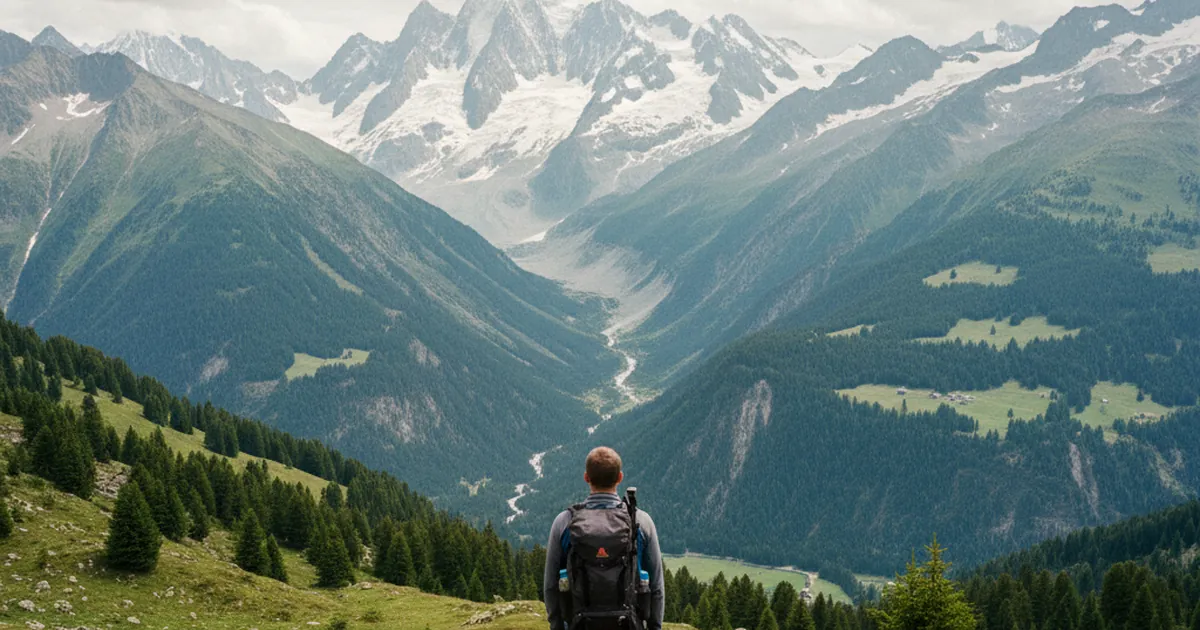
On August 8, 1786, two men stood on the summit of Mont Blanc for the very first time. Their names were Michel-Gabriel Paccard and Jacques Balmat. One was a doctor in Chamonix, the other a crystal hunter and chamois tracker in the high pastures. That day, without bottled oxygen, without fixed ropes, without any of the equipment we now take for granted, they wrote the opening chapter of alpinism. To understand what it means to hike in Haute-Savoie today, you need to know the story of those who, before anyone else, chose to look at these summits not as cursed places, but as destinations.
Paccard and Balmat: two men for one summit
In 1786, Mont Blanc remained the roof of the known world, a snow-covered giant that valley dwellers regarded with a mixture of dread and fascination. The Genevan naturalist Horace-Bénédict de Saussure had offered a prize back in 1760 to whoever found a viable route to the summit. For twenty-six years, every attempt had failed.
Jacques Balmat knew the mountain like the back of his hand. During an earlier attempt, he had spent a night at high altitude, discovering that survival there was possible. This experience gave him a sense of which routes might work. He proposed a joint attempt to Michel-Gabriel Paccard, a doctor with a passion for natural sciences.
They left Chamonix on the evening of August 7. By August 8, after a night out in the mountains and a long day of effort, they reached the top. Paccard, according to contemporary witnesses, took scientific observations and measurements. Balmat, exhausted, was guided along. They descended in the dark. The feat was recorded, but for many years a bitter dispute over credit would cloud recognition of Paccard's role. Only through later historical research was his contribution fully restored.
Horace-Bénédict de Saussure: the patron of the pioneers
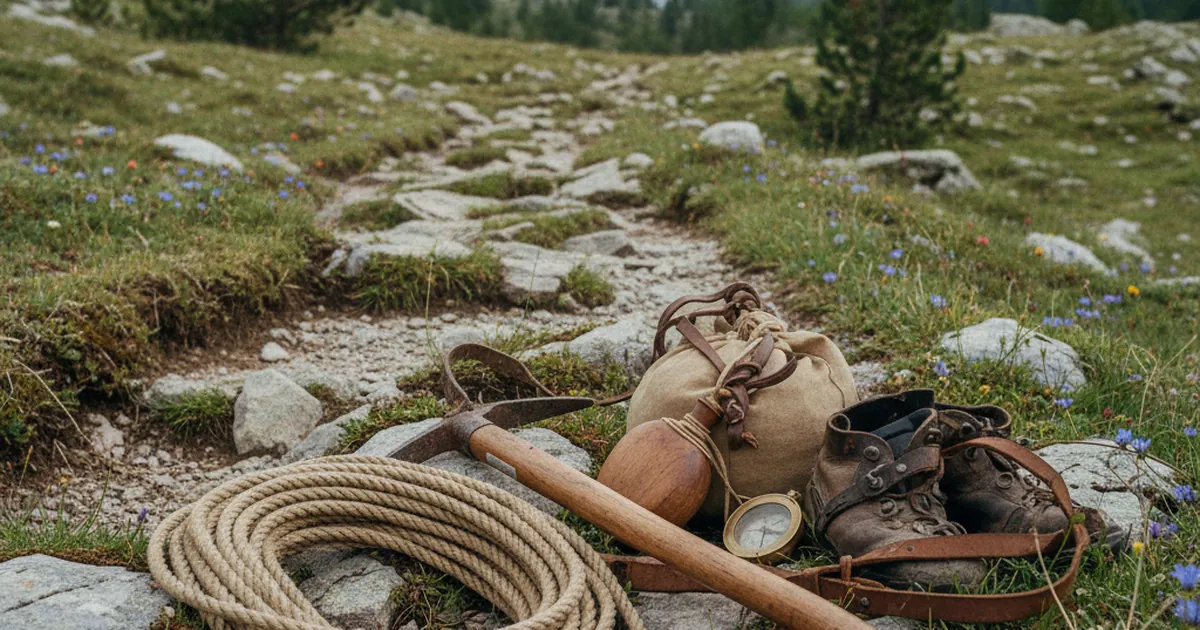
Saussure was not content simply to offer a reward. The following year, in 1787, he made the third ascent of Mont Blanc himself, accompanied by Balmat and a team of guides. He brought scientific instruments: a barometer, a hygrometer, a thermometer. At the summit, he measured atmospheric pressure, observed the colour of the sky, and took meticulous notes. His ascent marks the meeting point between mountain practice and the scientific spirit of the Enlightenment.
Saussure published his Voyages dans les Alpes in several volumes between 1779 and 1796. These accounts circulated among educated readers across Europe and transformed the Arve Valley and the Mont Blanc massif into destinations of intellectual curiosity, long before they became tourist hotspots.
The birth of a collective passion
The 1786 ascent acted as a trigger. In the decades that followed, British, Austrian and Italian alpinists launched themselves into the conquest of the great peaks. Chamonix guides became a recognised profession. In 1821, the Compagnie des Guides de Chamonix was established: the first professional mountain guide organisation in the world.
In France, the Club Alpin Français was founded in 1874. It united mountain enthusiasts, published hiking guides and funded the construction of mountain huts. The mountains stopped being a space of fear and became a terrain for adventure, contemplation and self-discovery. Refuges opened across every massif, trails were marked, and what had once been the preserve of crystal hunters and scientists gradually opened to everyone.
Following in the pioneers' footsteps today
The Pays du Mont-Blanc remains one of the great hiking destinations in Haute-Savoie. You will not reach the summit as Paccard and Balmat did, but you can walk paths that skirt the same glaciers, cross the same larch forests, and take in the same horizons that inspired the fathers of alpinism.
On a more accessible scale, the summits and passes of the Pre-Alps tell their own story of people moving through the mountains. Smugglers, salt merchants, shepherds: all of them blazed trails that we still follow today. The route to Mont Baret and the Col des Contrebandiers carries within its very name the memory of those clandestine crossings over the ridgelines.
Further north, in the Chablais, you find the same ancient relationship with the mountains: generations of men and women crossing these landscapes to trade, to graze livestock, to survive. The alpinism of Saussure and Paccard did not invent the frequented mountain. It invented the mountain desired for its own sake.
The lasting legacy of 1786
Two hundred and forty years after the first ascent of Mont Blanc, alpinism has become a global pursuit. But it all started here, in the Arve Valley, with a local doctor, a stubborn crystal hunter, and a Genevan naturalist who believed that science could climb higher than the clouds.
Their legacy is not only athletic. It is also philosophical: the mountain is a space that can be understood, measured and respected. This idea, born in the age of Enlightenment, remains at the heart of what it means to hike in the Alps today.
It is no coincidence that routes like the Tours Saint-Jacques and so many other trails across the region carry the memory of those who walked before us. To hike is always, in some way, to be someone's successor.