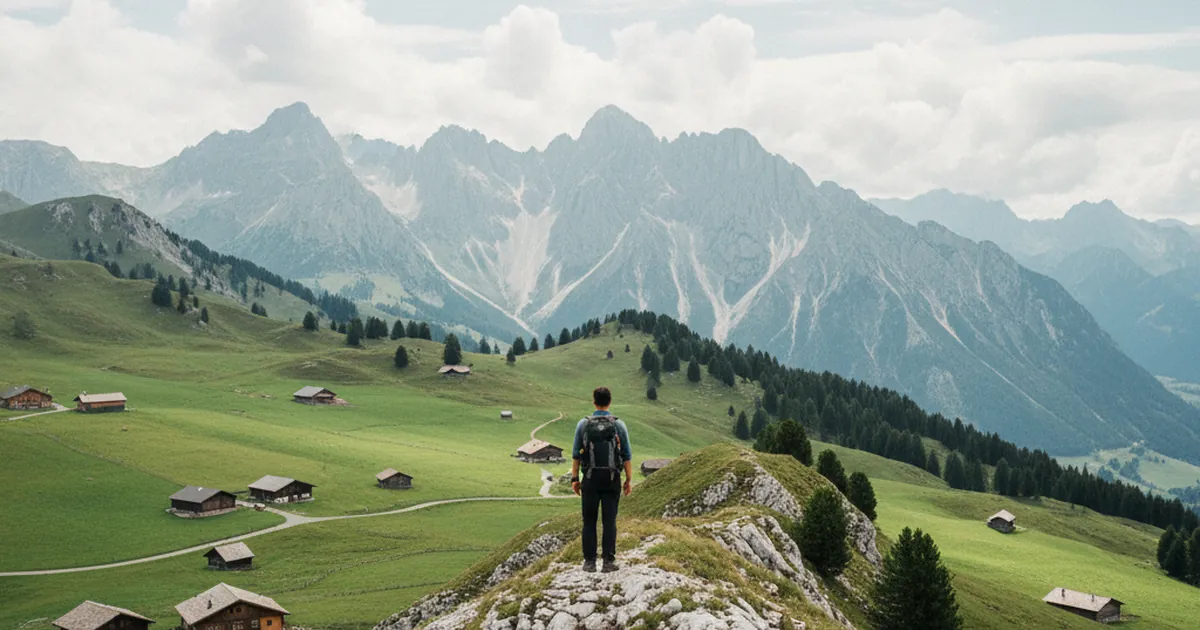
The Aravis and Bornes massifs are Haute-Savoie's most recognisable face: serrated limestone ridges, high pastures grazed by Abondance herds, traditional chalets perched on the slopes. If you want to go hiking in Haute-Savoie in an area that combines variety, strong character and a manageable approach from the valley, the Aravis and Bornes should be high on your list. This two-part massif gathers, within a few hours' walk of each other, everything from gentle family loops to committing exposed ridge routes for seasoned walkers.
A landscape carved in limestone
The geology here comes down to one word: limestone. The Aravis chain runs for around thirty kilometres from the Aravis pass to the Colombière pass. To the east, the flanks drop as sheer cliffs. To the west, they ease off into pastoral land. This contrast is visible from any high point: on one side, grey walls and open drops; on the other, green summer grazing land streaked with trails.
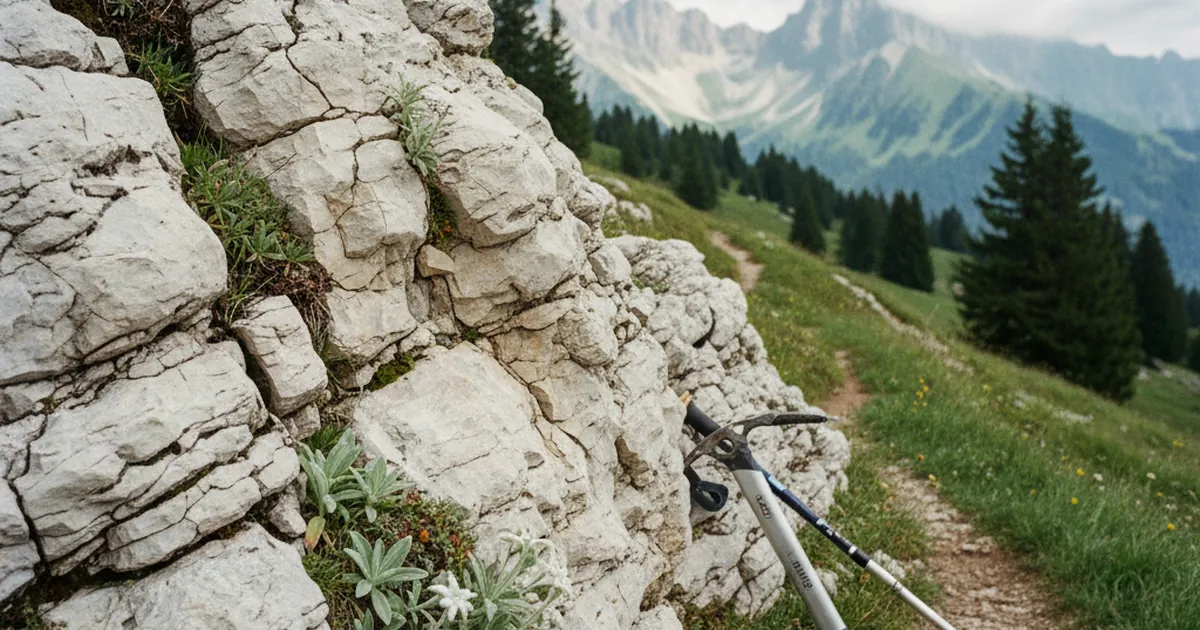
The Bornes massif, its immediate western neighbour, has a different feel: more rolling, more forested lower down, more open at altitude. The Parmelan, to the south, is known for its lapiaz, expanses of bare limestone dissolved by rainwater over centuries. The Glières plateau, historically significant, offers long easy walks in an open setting.
Reblochon, pastures and cows
You cannot talk about this area without mentioning Reblochon AOP cheese. Thônes, the capital of the Aravis valley, is the cultural and economic hub of local cheese production. In summer, trails radiating from the valley cross the production pastures: you pass Abondance and Tarine herds, hear the cowbells, and spot the mountain huts where the cheese is made. Some producers welcome walkers for a visit, though it is worth checking opening times in advance.
These pasture landscapes define the area's identity. In July and August, when the herds are high up, the ridges come alive and the huts open. It is also peak season for wildflowers: meadow cranesbills, columbines and orchids scattered across the limestone grassland.
Lesser-known routes worth exploring
The fame of the Tournette and the Parmelan tends to funnel most hikers onto the same itineraries. Yet the area has no shortage of quieter outings that deserve equal attention, especially if you value solitude over reputation.
The Pointe de Talomarche et Nan from Montremont, near Thônes, is a solid example. This difficult-rated loop covers 10.8 km with 1,072 m of elevation gain, reaching 1,844 m. The route follows seldom-visited ridges with open views across the Aravis chain. Even in August, you are unlikely to cross many other hikers on this one.
On the southern Bornes side, La Figlia from Allèves is a moderate outing (8 km, 636 m gain) that climbs steadily through forest before opening onto a viewpoint. The start is from Allèves, one of the area's quieter villages that rarely appears on the radar of passing tourists. It is exactly the kind of route you can do on a weekday without meeting another soul.
The area's defining summits
For hikers aiming for real height, a few summits stand out. The Tournette, above Lake Annecy, is the reference itinerary for the area: its approach from Montmin is the most direct, and the elevation and exposed passages make it a route suited to experienced walkers. The view from the top over the lake on a clear day ranks among the finest in Haute-Savoie.
Further north, the Pointe Percée (2,750 m) dominates the Aravis chain. Its ascent requires solid alpine experience and proper equipment. For those who prefer to stay on non-technical ground, the intermediate passes of the area (Col des Annes, Col de la Colombière, Col des Aravis) offer wide-ranging panoramas without the added difficulty of the high summits.
When to go and how to plan
The hiking season opens gradually from mid-June. In May, the Aravis ridges still carry snow and higher trails are often wet or partially buried. July and August are busiest but also most rewarding for the pasture landscape. September is frequently cited as the finest month: the herds are still up high, temperatures are mild, and the first autumn light begins to change the colours of the slopes.
Annecy is the main gateway from the motorway network. From there, Thônes is under thirty minutes along the D909. La Clusaz and Le Grand-Bornand are the main resort bases at altitude. In summer, some ski lifts run for walkers, cutting several hundred metres of ascent. Trailhead car parks fill quickly on summer weekends: an early start is the simplest solution.
The Aravis and Bornes massifs offer what few other parts of Haute-Savoie can match: a dense trail network, a strong cultural identity built around cheese and livestock farming, and the freedom to choose your level of challenge any day of the week. Whether you start on a grassy plateau or aim for a limestone ridge, the terrain is there, well-marked and varied. And often quieter than you would expect the moment you step away from the well-known classics.