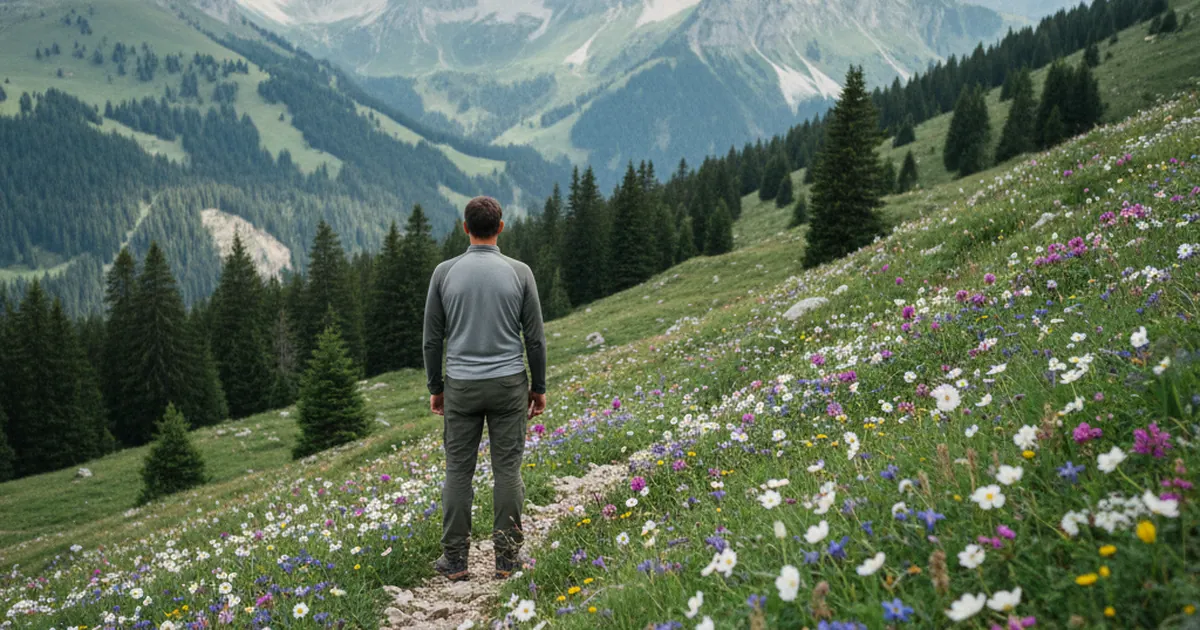
In June, the mountains look entirely different. The snow retreats, the high pastures come to life, and carpets of wildflowers cover slopes that were still bare the week before. It's a short window, often just two to four weeks depending on altitude and the year's snowpack, but it's one of the most rewarding times for hiking in Haute-Savoie.
The flowering window
June is the turning point between the winter mountain and summer in the French Alps. Below 1,500 m, the meadows come alive as early as late May. Between 1,500 and 2,000 m, flowering typically peaks during the first half of June. Higher up, you often have to wait until July.
This altitudinal staggering creates a wave effect you can follow week by week: start on the lower slopes early in the month, then move higher as the season advances. It's one of June's great advantages, a flexibility in timing that summer no longer offers once the holidays begin.
What you'll find in bloom
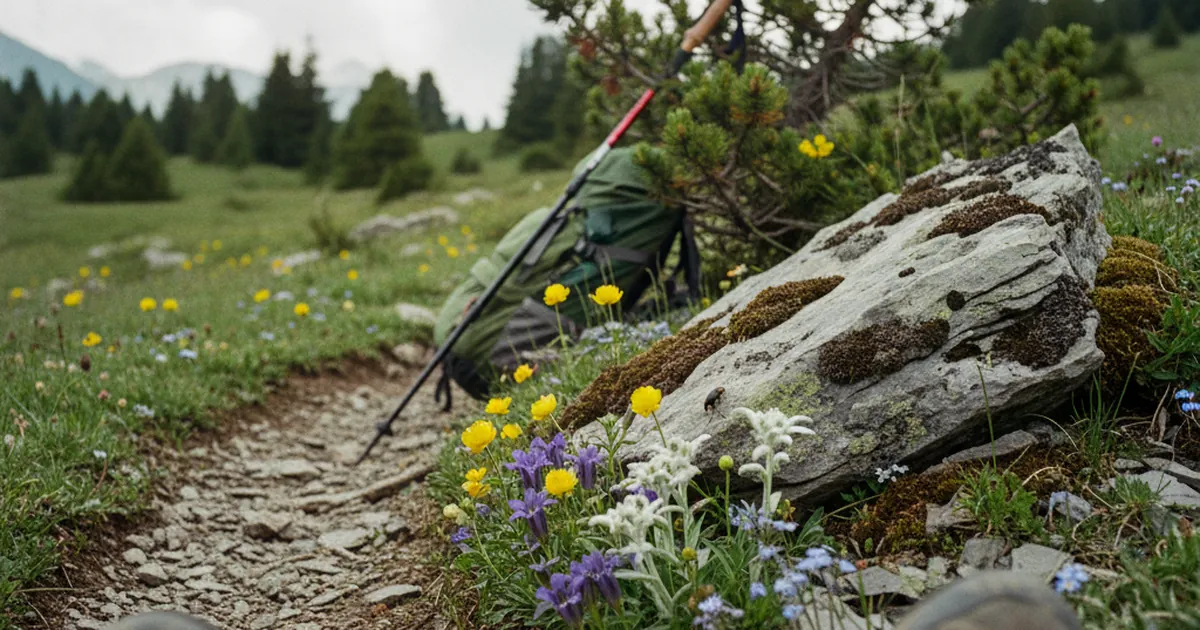
The species you encounter depend on altitude and aspect, but several plants define this season unmistakably.
- Alpenrose (rhododendron ferrugineum) covers slopes between 1,400 and 2,200 m in vivid pink, often spectacular when it grows in dense stands across a whole hillside.
- Anemones, white or pale violet, mark the spots where snow has melted most recently. They are among the first flowers to appear.
- Wild orchids, common in hay meadows and woodland edges between 700 and 1,400 m, are easy to miss but worth a careful look.
- Gentians, yellow or blue depending on the species, dot the limestone grasslands and grassy slopes.
- Martagon lily, with its distinctive downward-curving pink spotted flowers, grows in woodland clearings and forest edges.
One rule: do not pick anything. Most of these species are legally protected, and removing a plant from a mountain ecosystem disrupts communities that take decades to recover. Stay on the path and observe.
Two areas worth exploring this month
June is a good time to move away from the busiest trails and explore less familiar areas.
The Chablais offers a range of routes at mid-altitude, moving between conifer forests and open south-facing pastures. The Chavasse and Chavan via Lac de Vallon loop, starting from Bellevaux, is a solid example: a moderate circuit that climbs toward south-facing hollows often thick with alpenrose in June. The area sees few visitors early in the season, making it a genuinely peaceful outing.
On the other side of the department, the Bauges massif offers a different flora profile, with more orchids and yellow gentians in its limestone meadows. The Montagne d'Entrevernes loop, starting from Entrevernes, is particularly rewarding in June when the forest clearings fill with martagon lilies. It's a physical route (862 m of ascent, around 3h30) that earns its views.
Practical notes before you go
June is not yet summer. A few things are worth bearing in mind.
- Residual snow: between 1,800 and 2,200 m, patches can persist on north-facing slopes into mid-June in heavy snow years. Check local conditions before heading out.
- Unstable weather: convective storms often build through the morning and strike in the early afternoon. Start early and be off exposed terrain if clouds are building.
- Wet trails: north-facing slopes stay damp well into June. Clay sections can be slippery, so proper footwear with a solid grip is essential.
- Insects: below 1,200 m and near watercourses, mosquitoes and biting flies can be persistent. A light repellent is worth carrying.
Fewer people, more to see
Perhaps the simplest argument for June: you'll have the trails largely to yourself. The school holidays haven't started, car parks at trailheads are accessible without a queue, and the mountains hold a kind of stillness that July simply doesn't offer.
Wildlife is also more visible at this time of year. Ibex come down to lower pastures to graze, marmots are newly out of hibernation and easy to spot, and raptors hunt the ridgelines in the clear morning air.
June offers a rare combination: cool conditions, flora at its most expressive, and mountains still free from summer crowds. Make the effort to get out this month, and you'll discover a side of Haute-Savoie that many hikers simply never see.